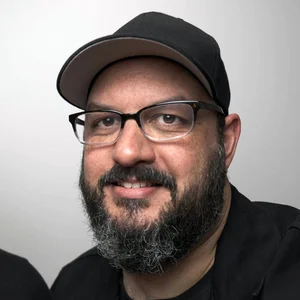
Blair recognizes that AI has triggered a knowledge product oversupply and now we have a signal-to-noise ratio problem. He sees reputation and reach reshaping the knowledge economy, consolidating a lot of power and wealth among a smaller number of experts who demonstrate their trustworthiness and rise above the noise.
Links
“Demand Is the New Supply” by Blair Enns for winwithoutpitching.com
Transcript
David C. Baker: All right, Blair, today I'm interviewing you on Demand Is the New Supply. Now, that's the title that you gave it. Did you play with any other title? What's another way to say this?
Blair Enns: You're laying a trap for me.
David C. Baker: Yes. Duh.
[laughter]
David C. Baker: What you're saying is that there's way too much supply and not enough demand?
Blair Enns: What am I saying? I'm saying the old world, the pre-internet economy-- I'm channeling my inner Ben Thompson from Stratechery. In the pre-internet economy, if you could consolidate supply, you won. The way you consolidated supply is mass production, mass media, and then distribution in the big retail stores, typically. If you had supply, you won, and demand would find you, and now it's the other way around. What's the trap that you want me to fall into? What's the punchline you're looking to deliver?
David C. Baker: Oh, no, it was actually an honest question. I know this is shocking to you, but--
Blair Enns: Since when do we open with honest questions?
David C. Baker: [laughs] I know. If we flip this around and said, "Supply is the new demand," I know what that means, but I'm less clear about what it means when you say, "Demand is the new supply." Essentially, you're saying there's way too much supply. The marginal cost is basically zero because of AI, and now we have to pay a lot more attention to demand and how that relates to running our businesses.
Blair Enns: Now you've got me thinking. Is my headline backwards? Is supply the new demand? No. What's king here?
David C. Baker: Demand.
Blair Enns: Yes, demand. You look at your inbox, and your inbox is filled with people selling these AI products and services. They're all living in their parents' basements, broke. It's not even them sending their emails. It's their agents, and they're spamming the whole world. Obviously, I'm overstating this, but every one of these things that I no longer reply to, it's like there's another fleeting business that's not going to make it.
David C. Baker: Not just your inbox, but LinkedIn too.
Blair Enns: Yes.
David C. Baker: I don't want to presuppose this. I guess this should be a question, but you're presupposing that agencies, the people who listen to this, are seeing both sides of this equation. They're having trouble cutting through the noise, and they're also getting inundated with people who want to sell them things.
Blair Enns: Yes, and some of them are developing new products, which we've talked about before. They have a client relationship, they solve a client problem, and they solve it increasingly through some sort of technical innovation using AI, and they realize, "Oh, this is a product. We could spin this up into a product business." They create a separate little product business, as many thousands of other people and other businesses have done, so used to a world where, "Oh, I've got a novel product. I have supply. I can sell this thing." The problem is everybody's got supply. Everybody's got a novel AI product, an AI agent, an AI solution to a problem. Even the clients do.
There's a lot of supply of solutions out there, of new digital AI-based solutions, and they think, in the hangover from the previous world, it's like, "Supply is everything. I've got something nobody else has. Now let's go find somebody to sell it to." The reality they're running into is that the relationships are-- It's one thing to have supply, but everybody's got supply now. Who's got the demand? The demand is being aggregated into an increasingly smaller number of sources, and that's why you have-- not to jump ahead a little bit, but you have things like the rise of the expert influencer, and all of a sudden relationships are more important.
David C. Baker: This is another one of our non-AI episodes about AI. [laughs]
Blair Enns: It's not an AI episode, but it's steeped--
David C. Baker: In AI.
Blair Enns: I would assume our listeners just accept that, like I said in a recent episode, it's the water we're swimming in now, so we're not going to not talk about it.
David C. Baker: Yes. I can't remember any sea change that occurred this quickly. AI has been around a long time, but about the last two years, it's been really pretty remarkable. You tell a story in your article, which is by the same title, 'Demand is the New Supply'. You tell a story about how somebody asked you a question, and you were able to help them, and it bypassed all the public channels. Talk about that and why that was different and what it prompted in your mind about the difference between this approach, demand is new supply, and supply is new demand. How it sparked the thinking around individual relationships and trust.
Blair Enns: At about the time, I'm just sick to death with the crap that's in my inbox, and I'm thinking, "Maybe I'll just make a policy about-- as a matter of policy, I will no longer reply to unsolicited emails." I'm thinking about that. Then I get a text from a mutual friend, and he says, "Hey--" somebody else that's very close to him that I also have a relationship with. He said, "I'm helping this person who's a family member launch this new business. Really highly specialized. It's so highly specialized that it's basically podcast booking appearances for a very specific type of professional in very specific situations."
He said, "Do you have any clients that match that description?" I thought about it. I said, "I can think of two off the top of my head. I'm happy to introduce you." I sent email introductions to both of those people, and it dawned on me. I'm overwhelmed with solicitations, email, and social media, LinkedIn. Those channels are dead to me as a way of hiring somebody. I no longer respond to unsolicited electronic inquiries. Unless somebody can prove deep knowledge of me. Unless somebody can prove that they really, really, truly know me.
Like, "I've read your book, I've been following your podcast," and these very specific things, observations that clearly aren't AI, and there are a lot of attempts at that. At the time when I'm considering implementing this policy, I'm thinking about, wow, a friend of mine reached out. I think highly of this person and of the person that he's helping. I know he wouldn't ask me for something unless it was very good. I can tell by the description of the thing. I think that's really smart. He's a good, upstanding person so is his family member. I have no doubt that if I have a client that they would be able to add value to my client's business.
I do the work, I think about it, and then I do the introductions. I'm happy to make the introductions. Then I think about that. What's going on on my client's end? Surely the same thing is happening where they are inundated with these unsolicited requests. When they get one from an introduction like this, from somebody they trust, now, that's assuming that they trust me. I'm making assumptions that they trust me too. I want to be helpful to them. I want to be helpful to my friend. It's an age-old scenario of being referred into an opportunity. I'm realizing, oh, this is one of the few channels left in this new world where the electronic avenues in or channels in where you can easily spam your tam.
You don't even have to do it. You can set up agents to do this. You can shield yourself from all the domain damage it will do by getting all these different email domains, et cetera. You don't even have to be involved. You can try to stir up some business. In that world, this scenario where you're referred in by a trusted colleague, friend, or advisor, that's got way more value.
David C. Baker: I have a question about this. You went on in the article to talk about the professionalization of influencers, and you and I both have rolled our eyes at traditional influencers. I can't stop laughing just thinking about it. You're saying this is a different angle on influencer. What if you became a professional influencer? Would people still trust you?
Blair Enns: Are you saying me, myself, or the listener?
David C. Baker: This person that you contacted on behalf of your friend, these two people, they gave it the time of day because they trusted you. If all you did as a business was connect people, would they then think about you differently? In other words, you didn't make any money by referring these two different people to your friend. It was just something you wanted to do, and there was a level of trust that facilitated that. If you're making money from being a professional influencer and connecting people, does that change the equation?
Blair Enns: It's an interesting question because a section of this post I call the Rise of the Expert Influencer. I'm just extrapolating out from my experience of referring somebody in, and both of my clients engaging with my friend. I don't know if they got hired or not. I don't know what the outcomes were, and I don't really care what the outcomes were. Both of those invitations were warmly received, and conversations ensued. I'm thinking, "How do you scale this up?" I hesitate to use the word "scale," but are there other ways that this can play out?
When I was thinking through it, I thought influencer culture starts to make sense to me now because there's so much noise out there, at some point, you decide that an individual, maybe a corporation, but it's more likely to be an individual, you will trust an individual to be the definitive source for you in an area, and you will take their recommendations seriously. Now that's a expert influencer business. I tend to think of an influencer as somebody who's famous for being famous or famous for their ability to promote themselves. I give a really good example, I think, of an expert influencer in this post, my friend Hector Garcia. You're going to speak at his conference in a couple of weeks, right?
David C. Baker: Yes, exactly.
Blair Enns: He's famous among accountants and bookkeepers. Basically, he's a deep well of knowledge on the subject of QuickBooks. He's got a YouTube channel with 300,000 subscribers. He has over a thousand videos. The QuickBooks help desk sends people to his videos. He's got the demand. He's got the eyeballs. He can sell these people anything. Hector's got some really interesting businesses. He owns an accounting practice. He owns a community for accountants. He runs an annual event for accountants. He's got a software business. He's got a few other things running. All of this is powered by his YouTube channel.
He created the demand and the relationship, and he's become this trusted advisor. Then he refers things to people. Some of those businesses are his, and some are referrals to QuickBooks. When you think about that business, if you're an accountant, and you've got a question around accounting software, Hector would be the source. Hector has multiple businesses, the point I make in this post is his business model is not under any kind of existential threat because he has multiple business models. He has multiple businesses, but they all stem from the fact that he is seen as the authority, a trusted authority on subjects.
He's not the classic influencer per se. He's the influencer who actually knows something, and that's me being a little bit demeaning to other influencers. Then I have another friend, you know him as well. I won't name him. He's got a big YouTube following, and he runs an advisory business. He made the point to me recently that-- he said his audience is so big that brands are now seeking him out. He had this great line. He said, "Brand is now more important than product." He's held in high regard by his audience. They trust him so he can recommend things to them.
He is an agent who brings them deals. He only does deals with businesses that he knows, uses, and respects. I think his audience trusts him that he's not going to recommend anything-- even if there's money in it for him, he's not going to recommend anything that he himself doesn't use, and he wouldn't feel comfortable recommending. Then he's pointed out to me that some of the most famous podcasts in the world, many of these people, their business models are, they end up owning equity in some of the businesses of the guests that they feature. I'm not going to name names. Some of it's not above board. Some of it's a little bit shady to me.
In those cases, it would be maybe the influencer stepping over the line. Maybe if it was known, there would be some erosion of trust. I think in the example of my friend, let's say the two friends, let's include Hector in this, they're both highly regarded in their space. When they make a recommendation, people trust them. Even if it's obvious, they disclose the fact that this is a paid relationship. I think that is a sign of things to come simply because of this point that we've been touching on, which is when there's so much noise and there's so many people selling different things and you don't know who to believe and who to trust, you will increasingly turn to a small number of trusted advisors or influencers in different space.
Let's say I follow David Baker because I like David Baker's advice. I think one day I'll hire David Baker, maybe I'll hire David Baker a couple of times. I'm still listening to 2Bobs Podcast. I'm still reading the punctuation weekly blog posts. Then David Baker says, "Hey, I'm entering into a formal paid relationship with so-and-so. I've known them for years. I trust them, et cetera. I recommend them." That recommendation is going to carry a lot of weight for a lot of people. Your audience will let you monetize that relationship. It will all be okay as long as it's above board. If they trust you, they will trust your recommendation.
I think increasingly, you, the listener, the expert advisor will increasinly-- the forces will push you to either become that person or you will feel pressure to work through that person because they will have the eyeballs, they will have the trust, and you will need them to recommend you. I think that's the world we're moving toward.
David C. Baker: There's some categories where I just know I would never do something because I think it's wrong or whatever. I'm not saying it's wrong for other people. Then there's other categories where I have a preference, and I'm not sure I'm right, but I just have a preference, and I'm just going to stick with it. I'm open to changing. This is one of those things where I have left so much money on the table because over the last 30-- it'll be 33 years in March, I don't take referral fees, and I don't pay referral fees. I have turned down hundreds of opportunities.
I hear what you're saying, and I think back over all of those times I've turned it down and think, "Well, did I make a mistake or not?" It's not like I don't make referrals. We actually have a Google sheet that's I think 11 categories and in each category there's anywhere from 3 to 20 different places people will refer. Somebody will say, "Hey, can you recommend somebody that does fractional accounting or a lawyer or something?" We'll go to our list, and I'll find out a little bit more about what they need. I'll say, "Hey, I probably would work with this one. If that doesn't work, then maybe the second one. If you want me to write an email introduction, happy to do it."
It's all free, and I've had many people want to do paid posts and all that stuff, and I just have never done it. I don't know that I'm right. I feel like I could be a little too precious about this stuff, but there can never be any question in people's minds about my opinion being for sale. You listen to talk radio, for instance. There's two shows I listen to, one's on politics, and one's on sports. They'll pause, they'll read a commercial. I don't believe that they're either using it or that they care about it, even though they might. I just don't know how to distinguish. This is an area where I'm taking a different path, but I'm also saying, "Yes, I might be wrong on this one."
Blair Enns: I don't know if you saw this. We're recording this October 26th, 2026. Last week, Ben Thompson from Stratechery, and you and I have been reading and listening to Ben for years. He announced that he's taking on a sponsor.
David C. Baker: Yes, I read that.
Blair Enns: He's never talked about the money he makes, but other people have speculated on his business model. It appears that he makes about $15 million a year writing a daily post and then doing some podcasts. He's the world's leading independent business analyst on technology and media. He is at the top of that heap. He's probably the most highly respected business analyst in the world. It all started out as a blog. Last week he announced that he's taking on Stripe as a sponsor and he had this lengthy, lengthy, unnecessarily long post explaining why he's doing this and how it will affect his covering of the financial services space.
He was very apologetic about it. I've never emailed him before. I just sent him a one-line email saying, "Dude, we trust you." He's built up so much trust that he could take on anybody as a sponsor, and he's very careful about this Stripe powers his business and it's going to change the way he's going to cover the financial tech space a little bit less because he doesn't want people being worried about his bias towards Stripe. He has built up so much equity. He could take on any sponsor, maybe not any sponsor, and his audience trusts him. I think you're in the same place.
It doesn't mean that you have to go that way. I'm just saying, I think increasingly relationships are more important, these things. If you do have an audience who trusts you, they actually want to know what you recommend. I've never been super comfortable with this either. I've always been worried about bias in my recommendations. Increasingly, I'm starting to embrace it. There are other people where I want to know, "Okay, you're talking about the problem, but who do I call for the solution?" I want them to tell me. I think increasingly that's the world we're living in.
David C. Baker: Yes. You just said something that really struck me. Your listeners, your readers, the people who follow you want to know what you think. That's interesting. If that's true, then that does change it a little bit. I have reached out to two people to see if I could be a promoter of their stuff for free, but it didn't have anything to do with this space. One was a tool brand, and one was an RV brand. Nobody took me up on it, just for the record. I'm not that interesting to them, but "I love this stuff so much. I'll be a promoter of your stuff for free." [laughs] They didn't take me up on it.
Blair Enns: I could see you doing a second career of any of that thing because you have deep interest, and if you know something about a topic, you know about it deeply. You understand it. You love to know how things work. You understand how things work. When you get into it, you know everything about a subject once you get into it. You would be an amazing-- I think, okay, everybody, are you with me? Should David become an RV influencer?
David C. Baker: Newmar RVs, Festool tools, Sako sniper rifles, Leica cameras.
Blair Enns: RVs, sniper rifles, and cameras. [laughs]
David C. Baker: How do all those go together? [laughs]
Blair Enns: Only in America. That's raised a lot of questions.
David C. Baker: For some reason, his name slips my mind, but the Canadian guy that writes--
Blair Enns: Shane Parrish?
David C. Baker: Yes, Shane, right. Every once in a while in his emails, he will promote something, and he'll say, "Listen, I'm not making any money on this. This is just something I think you need to hear about." I have never seen anybody else do that. I thought that was really fascinating. Then there's others that are sponsored, but then every once in a while he just says, "Hey, this is something I've just seen. They're not paying me. I just think y'all really ought to look into this."
Blair Enns: I think there's some people listening to this thinking, "Come on, guys, you're just catching up to this. We've been aware of this for a while."
David C. Baker: True of many of our episodes.
Blair Enns: [chuckles] You and I have not been. Like you've said, and I say this in this piece, I've long disdained influencers and influencer culture, but now I understand. I still have a huge disdain for the get-rich-quick people, all that stuff. I have my trusted sources I go to on all topics and those trusted sources, I want to know what they think. I want to know, in some cases, what products they use. I don't need to know what kind of bed they sleep on.
I'm currently shopping for a mattress, and I'm not really going to listen to anybody's opinion on this. If Ben Thompson was selling a mattress, I'd be like, "Oh, come on." If I listen to sleep podcasts-- are there sleep podcasts? I had a trusted source in that, I would take their recommendation. Hit me up, anybody, if you know about a-- I need a firm mattress. [laughs]
David C. Baker: Oh, you are going to regret that question so much. Let me wrap this up by asking you a question. I'm listening to this, and I'm buying it, and I want to be somebody that earns people's trust. How do you earn trust? You're running an agency, you're a principal. How do you get that? It doesn't happen quickly, obviously. We know how to destroy trust, but how do you earn trust?
Blair Enns: Yes. We could talk about that maybe in a future episode. We'll just answer it in a sentence the same way you always have. You make your thinking public. You and I talk about this a lot. You and I both agree that we have to think through our fingers. You do your thinking through writing, you publish that writing. That's how you earn trust. As soon as you have AI doing that writing, then that's an admission that you're never going to get to that place. Because, again, we've talked about this, that the output is a proxy for the input, for what's going on inside us in our brains. As soon as you start faking that by using something else to help create the output, you're not going to build trust with anybody.
David C. Baker: In a sales conversation, you're not talking about you so much as asking really great questions, and you're turning down opportunities that are not a good fit. Talk about earning trust. That's a really great way to do it.
Blair Enns: Yes, you're not chasing everything. You're being selective. There's lots of ways. We could talk about that in more detail in a future episode.
David C. Baker: All right, people. If you know anything about beds, I'm looking for about 200 people to email Blair.
Blair Enns: What's the Dutch-- No, it's Swedish, the Hastings. What's the $80,000 bed?
David C. Baker: I have no idea.
Blair Enns: I want something more expensive than that.
David C. Baker: I must listen to different influencers than you do.
Blair Enns: That's a story for another day.
David C. Baker: All right, Blair. Thank you.
Blair Enns: Thanks, David.