Why Entrepreneurs Are Unemployable
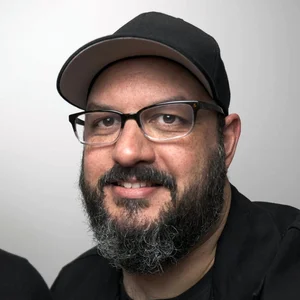
Blair interviews David about a recent article in which he argues that the very traits that make entrepreneurs successful also make it hard for them to give up being their own boss and join someone else’s company.
Links
"What Makes Entrepreneurs Unemployable" by David C. Baker for punctuation.com
Transcript
Blair Enns: David, have you ever advised any of your agency owner clients to shut it down and go get a job?
David C. Baker: Oh, yes. Probably a dozen of them over the years, 1%. That surprise you?
Blair Enns: I want to know if the irony of that strikes you as somebody who you probably see yourself as I do, as unemployable.
David C. Baker: I think if you're not an entrepreneur, you are employable. If I don't think you're an entrepreneur, I'm going to recommend you shut the firm down, which means you are employable somewhere else. It's not always quite that simple because there might be multiple partners, and as long as one of those partners is clearly an entrepreneur, then they could work really well, but yes, I have for sure.
Then a bunch of my clients have decided that on their own. It used to be you might discover that you were on the wrong side of the divide. That you were on the client side and you really needed to be running your own firm, or the opposite, and you would fix that and flip to the correct side. It seems like there's more flipping back and forth these days, which I don't know how that feeds into my premise here.
Blair Enns: Does that negate our topic of what makes entrepreneurs unemployable?
David C. Baker: Yes, I guess, so we're done. This was a very quick--
Blair Enns: [laughs] Never mind.
[laughter]
David C. Baker: If somebody offered you a job. Oh, I can't even say that. They wouldn't have to fire you. You would fire yourself just graciously.
Blair Enns: From the job that I don't take, you mean?
David C. Baker: From the job you do take accidentally and incorrectly. The only variable is how long it would take before you decided it was a mistake. I'm thinking six months, seven months. What do you think?
Blair Enns: Oh, God, no. Before I showed up, I would realize the mistake. Both of us have been doing this long enough, and our careers or businesses are established. That's been a long time since any client ever offered me a job. When's the last time that happened to you? It must have happened in the early days where a client said, "You're really good at this. Why don't you come and be my general manager or president or whatever, janitor?" When's the last time that happened?
David C. Baker: It's never happened.
Blair Enns: Really?
David C. Baker: That says something, doesn't it?
[laughter]
Blair Enns: Yes. I'm surprised, but I shouldn't be. Never mind. All right.
David C. Baker: What about you? When's the last time somebody said, you should take over their sales?
Blair Enns: I don't remember. It's been a very, very long time. 15, 20 years, 15 years for sure.
David C. Baker: Maybe it's just that you and I are unemployable. We're just projecting this on everybody in the audience.
Blair Enns: Did you know you were unemployable when you were an employee?
David C. Baker: Yes, I did. The jobs I've had, I learned so much. Even though one of the bosses I had was really a jerk, but he had a good heart, and I still learned a lot. I don't regret working for him, but then the last job I had, that guy was a real jerk. He's still alive, so hopefully he doesn't listen to this. The business was going through a rough time. I was a general manager, and I had to lay off some people.
I knew that another round of layoffs was coming, and I just said, "You know what? I can't lay off these people. I need to let myself go here. This isn't a fit for me. It makes no sense for me to be general manager for a firm at the current size." It was smaller at that point, so I just laid myself off. I've never been fired. I've just always anticipated it like George in Seinfeld. Break up before she can break up with me.
Blair Enns: I've been fired, but that's a story for another day. Let's unpack this idea of what makes entrepreneurs unemployable. Why is it that some clients, even in tough times, and it's relatively tough times out there, as of this recording in January of 2026, for a lot of independent creative firms. Some in tough times maybe should shut it down and go get a job, or they contemplate it, and they think, "I just can't do that. I am wired to do this. I am meant to do this." What are the reasons at the top of the list?
David C. Baker: Yes, there's four of them that I could think of. The first one is just this idea of unlimited earning potential. This one strikes me as true, but hilarious, because when you're working for somebody else, you don't decide what you make. Somebody else decides what you make. Usually, you're going to make less than the owner unless you're really good at sales. There's some rare exceptions there.
You just think, "Oh, gosh, I cannot live in a scenario where my income is capped." It's not like you need that extra money. Here's the hilarious part about it. You quit the job because you're an entrepreneur. You go start your own firm. Now, your income is not capped, but there's a good chance you're making less money now than you made when you were working for somebody else. It's this intellectual ethereal-- It's like, "I don't want it to be capped. It doesn't matter too much what I make, but it can't be capped." I think that's one of the reasons that entrepreneurs are who they are, is they don't like the idea that there's a ceiling to what they can make when they're working for somebody else.
Blair Enns: That makes sense. Salespeople are like that, too, or a lot of high-drive salespeople are like that. They don't want a cap on their commission. They want unlimited earning potential. I have the same rationale for my many reasons to never retire. One of them is I don't think I could live on a fixed income, no matter how high it is. It's the same idea. To me, that's like being in prison.
David C. Baker: [laughs] That is so funny. Knowing you too, it's like, "Oh my God. That is so true." It's not like you spend a lot of money. The idea of a budget is just like-- what is it? You can't even spell the word budget.
Blair Enns: The joke in my house is I'm going to write a book called Europe on $5,000 a Day.
David C. Baker: [laughs] When you want something and maybe the money isn't there, it never occurs to you, "Maybe I shouldn't get that." It's like, "I'll go out and make money."
Blair Enns: I'll shake the money tree. Number one at the top of the list why entrepreneurs, maybe they're not unemployable, but they see themselves as unemployable, first of all, is the idea of restricting their income, their earning potential. They want unlimited upside, and they're willing to take the risk associated with that, meaning maybe there are years when you are in very little or nothing. They're willing to make that trade. After that, what's on your list?
David C. Baker: Next is this idea of mistakes. This one is also hilarious to me. I don't know why all of this is hilarious to me. As entrepreneurs, we make mistakes. When we are working for an entrepreneur, that entrepreneur makes mistakes. Somehow, the mistakes that that entrepreneur we're working for makes, those are much worse. [laughs] It's like something about "I'm allergic to any mistakes that are not my own. If I made the mistake, okay, I can fix it, but I just hate to live under a scenario where I have to eat the consequences of somebody else's mistake. I don't mind eating the consequences of my mistakes. I just don't want to eat them from somebody else's mistakes."
That's why it's hilarious to me because it's not like we are saying-- we do say we can run things better, but it's not like we're not going to make mistakes. It's just that they're going to be our mistakes, and we're okay with that.
Blair Enns: You can't countenance the idea of working for an idiot, but you don't mind being that idiot.
David C. Baker: [laughs] Yes. That's a better way to say it. Yes.
Blair Enns: There's a maxim, I don't know who first said it, but, "We judge others by their behavior, and we judge ourselves by our intent." Does that make sense?
David C. Baker: Yes. We don't look behind the actions at the intent. He meant well. That was just an honest mistake. We do that for ourselves, but not for other people.
Blair Enns: That might explain that. Makes sense to me. Next on your list is inefficiencies corrected by process. This one has got me scratching my head. What do you mean by this?
David C. Baker: What makes a great employee is a willingness to some degree to follow process. What makes an entrepreneur successful is their willingness to take risks, so their aptitude for risk. What comes along with that is the ability to see patterns and to fix them with better process. Now, here's where the hilarious part comes in here. The same people who put together processes are not the people who follow them. [laughs] You can see that in timekeeping, for instance. It's like, who are the worst offenders? Always, it's the people at the top. It's like, "Whatever." You make all these kinds of mistakes, but you really need to do it.
In the break room, we're going to post a little thing about anybody who didn't comply, and you don't get pizza on Friday, and all that nonsense. It's just an interesting corollary in that the people who are entrepreneurs, they see faults in the way things are done. When you are working for somebody else, you don't necessarily have the power to make those changes, but you're always looking at the way things unfold as an entrepreneur, whether you're working for somebody else or not, and you say, "This could be better." That's part A. Part B is, "I'm the one to fix it." That's a part of that personality profile. "This could be better, and I'm the one to fix it."
You want to run your own firm because you keep seeing these things, but you need your own firm to have the power to fix it, to put all these processes in place. It doesn't go further. You don't follow the processes, but you want the ability to just wholesale make any changes you want at the firm because of things that you see that aren't working the way you think they should be.
Blair Enns: It sounds like entrepreneurship is one big joke to you. All these things are tickling your funny bone about the way entrepreneurs think. Then you imagine dropping the entrepreneur into the job where there are systems and processes, and they have to follow them. What did they do then?
David C. Baker: They quit.
Blair Enns: [laughs]
David C. Baker: That's what I mean. They're unemployable because real true entrepreneurs can't follow process. When you're an employee, you got to follow process. That's one of the reasons you're unemployable.
Blair Enns: There's a relation to creativity there, at least the version of creativity that I subscribe to. That's this idea that creativity is the ability to see, which is the ability to think on your feet, and you can plot it out on a spectrum known as autonomy. Really creative people are highly autonomous. They issue systems, processes, and routine, and they want to reserve the right to think about it differently. What they really want to preserve is the freedom to adopt a new perspective, which means going and standing in a different place so you can look at the problem differently.
Systems and processes don't allow you to do that. They want you marching in a certain line and a certain rhythm, et cetera. The entrepreneur and the creative person really doesn't want to be hemmed in by the process. To your point, when they see inefficiencies in their business, they're pretty comfortable inventing processes for others.
David C. Baker: They don't mind just dumping a process seven days later and starting a new one. You see this happen in the EOS model where a visionary comes back to work Monday and says, "Hey, I've been thinking," and the integrator raises his hand or her hand and says, "Hey, you know this last process you brought me last Monday, we're still trying to implement it. Do you really want to change it right now?"
Blair Enns: That's where the integrator, speaking of my own business, needs to draw the line and say, "The last time you were thinking we're still wading through the carnage. How about you quit thinking and let's have the meeting that you agreed that we were going to have?"
David C. Baker: Can you say that in Colette's voice?
[laughter]
Blair Enns: I thought I just did.
David C. Baker: Oh, that's good.
Blair Enns: Anything else on your list of what makes entrepreneurs unemployable?
David C. Baker: Yes. I think it's so much a part of their identity. Somebody who is an employee attains a VP title, for instance, they've climbed the ranks. Say they're at a PR firm, there's seven levels. They've attained the VP level, and they're proud as can be for this. They can sit at that level and be fantastic contributors for a long time and be very satisfied, very happy. An entrepreneur looks at a VP title and just scoffs for themselves. I am laughing a lot here. I know. I don't know what's going on.
An entrepreneur, it's not enough to be CEO. You're also founder, CEO, President, you got to have three titles. It's like your whole identity is tied up in this. The joke is how do you know if someone's a pilot? It's like, "Don't worry about it. They'll tell you." The same thing is true with entrepreneurs. How do you know if somebody's an entrepreneur? Don't worry about it. It'll come out very quickly in the conversation. It's a part of their identity. I don't think it's bad. I think it's great.
I'm a builder. I'm somebody that makes something from nothing. Yes, made lots of mistakes. Maybe I'm not the best in the world, but this is mine. I made this. A lot of people helped me get here, and I appreciate them, but I made this. I'm the one responsible for this. That's part of the identity of the entrepreneur, and it's hard to maintain that when you're employed by somebody else. That's the last reason, I think.
Blair Enns: It's fun to poke fun at the characteristics of entrepreneurs. You and I are both entrepreneurs, and we serve entrepreneurs. I know I can speak for you when I say we both love entrepreneurs and love working with entrepreneurs. It's such a richer world than the opposite. I hope everybody's taking the jesting as it's intended. You have here three exceptions to this rule of where entrepreneurs are not unemployable. I think we've talked about them. Anything else you want to hit here before we talk about entrepreneurship?
David C. Baker: Yes. One is, we talked about this at the very beginning. If you are not an entrepreneur and you're running your firm, you're probably miserable. You correct that mistake, and you go work for somebody else. That's not a failure. That's actually a success to fix that. You go work for somebody else, you're happier, you sleep better at night, and so on. Another is when you sell your firm, because during the earnout, now, thankfully, earnouts are never five years. The longest they ever are three, and frequently, they're shorter than that, sometimes zero.
If there is an earnout associated with the purchase of your firm, then you are an employee, essentially. That's one of the factors that you think carefully about before you accept a particular deal, and while you craft that earnout really carefully. Then this one comes up every once in a while, this third exception, and I really love this one because if you look across the landscape of agencies these days, there are quite a few former principals who are working at these agencies but don't own them.
They decided that they weren't a great entrepreneur, but instead of going to work on the client side, they went to work for another principal. The reason I like this is because these people are often the very best employees you have because they understand what it's like to be in your role. They give you grace about how tough those decisions are. They take over little areas of a kingdom to relieve you of that. Everybody knows they're not out for your job. They tried that once. It didn't work.
They're like the former coach of a team that's now a position coach that could step in if you get sick or something like that. That's the third exception when you decide not to go work for the client, but go work for another entrepreneur in the same space.
Blair Enns: Yes, I haven't seen a lot of that, but as you're talking about it, I can see the appeal of hiring somebody who used to run a firm like yours. Seems like an obvious one. When you're talking about earnouts, I was thinking of many of the agency owners that I have known over the years who have sold their business and then just suffered during the earnout period because of that transition from an entrepreneur to an employee, just validating the fact that they were never meant to be an employee.
David C. Baker: Yes, absolutely.
Blair Enns: We're referencing a post that you wrote. It is called What Makes Entrepreneurs Unemployable. You don't use the word intrapreneur, but you talk a little bit about the entrepreneur who works for you. What do you want to say about that person?
David C. Baker: Yes, because many of these entrepreneurs that are listening to this podcast worked for somebody else, for another entrepreneur, and they discovered slowly that, "Oh, I'm not destined for this. I need to start my own firm." It was an ugly or a pretty breakup. Whatever. Those people who are now running their own firms they may have somebody on their team that is either a real entrepreneur and will start their own firm, or maybe they'll buy the firm from the entrepreneur they're working for, or maybe they think they're an entrepreneur and they're not.
What you shouldn't do is try to change somebody's mind, try to put golden handcuffs on. Whether the person is a real entrepreneur or not doesn't matter. It's do they think they are? If they think they are, then keep them as long as you can. Not with handcuffs, but just by involving them in leadership, having open books with them, teaching them everything you can. Then, when it's their time to leave, bless that and do it with as much goodwill as possible. Don't be evil about it.
I see too many principals who they look at somebody who's clearly an entrepreneur, and they don't know what to do about it. Don't try to change that person's mind. Now, assuming that this is a good-hearted person. If the person is evil, is going to take your clients and/or your employees, then bury them with extreme prejudice. Everything you can do up to the legal line. If everything is good, then make the best of it. Let them have fantastic memories of you because this is real. It's never been easier to start a firm.
After all, there are no moats. Like, "Tomorrow, I'm an entrepreneur," file a little form and hang out a shingle, and bam, I'm here. It's not like you got to get some certification. It happens a lot. Some of the people that started don't end up succeeding. That's fine. Then they sometimes come back. Some of those people, those boomerang employees, are also fantastic employees, especially if you've handled this process well. That's the one final note about having an entrepreneur who's actually working for you at the moment, how to handle that.
Blair Enns: As you're talking about that, I'm thinking of some of the agency principals I've known who are what I would consider to be the best leaders. I think all of them have been really magnanimous on that front when they've had entrepreneurs in their midst who wanted to go out on their own. Some of them even invested in their agencies, remained mentors to them for periods of time.
Your last point about some of these people come back, they find out, "Well, maybe I'm not an entrepreneur. Maybe I don't have the risk profile that I thought I had. Maybe it's more important to me at this stage in my life to have income security." They come back, and I think we've talked about boomerang employees like that before. You're a big fan of rehiring the good ones. I think a little bit of experience out there, putting themselves in your, the business owner's shoes for a while, and coming back, and understanding how difficult it is. That probably makes for a pretty good relationship and a great employee moving forward.
David C. Baker: Yes, for sure. Like you mentioned a minute ago, I too love entrepreneurs. I just love how intelligent and curious they are. I love how they can just make decisions quickly. That's what frustrated me when I was working for large clients, doing the same thing I'm doing for agencies. I was also working for large publicly traded companies, and I would just walk into the parking lot and think, "I've made no difference here. Nobody's going to make a decision." That's what I love about the clients I get to work with. They make decisions. They're not all correct, neither are the decisions that I make, but they make decisions. It's so gratifying to be part of a world where you can see that something could be better, and you make a decision to make it better. It's a beautiful thing.
Blair Enns: That's interesting. People who are used to selling to entrepreneurs, working with entrepreneurs, just even the sales cycle of selling to non-entrepreneurs. In my world, it would be selling to whole co-owned agencies. Oh, my God, the pace and the bureaucracy of it all. You know me, David, I lose interest after one sales call. If it doesn't close in one, it's like, "Yes."
David C. Baker: "It wasn't meant to be."
Blair Enns: Shouldn't be in the sales training business, maybe. Marcus, can take that out. Just kidding. You had a final thought on the relationship between entrepreneurs, generalists, and specialists. You want to leave a final parting comment on this?
David C. Baker: As if I haven't been rude enough to entrepreneurs. Entrepreneurs are generalists, and that's why they're really good at starting things, because they're good enough at doing lots of things, and then they bring people along, and so on. If your firm is successful, you're going to have to hire specialists who are better at every one of those things than you are. Now, you're a good manager that people want to work for.
If you find yourself looking at your team and you think you're better at most things than your people, or it could be that you just hired the wrong people, but that's not usually it. That just means you're a generalist with a very poor memory. Where you think, like, "Man, when I did that, it never took me that long." No, it's you just have a bad memory. That's one of the things that entrepreneurs need to realize is that they are generalists who know how to wrangle the efforts of a lot of different specialists and put beautiful things together for a great result for clients. That's what you are.
You know how to move all the pieces around. You're not one of those pieces, you're the person who moves those pieces around. You're the generalist, and you have to be okay with having lots of specialists who are much better at something than you are. You've got to be okay with that.
Blair Enns: That's great advice. Don't make the mistake of shaping your business like your generalist self.
David C. Baker: Right.
Blair Enns: The business should specialize, just as you have specialists in the firm. I like the idea that you're the one, the owner, you're the one moving the pieces around, and you're not one of the pieces. Very enlightening.
David C. Baker: Do I need to apologize for anything?
Blair Enns: No, I don't think so. I think the entrepreneurs listening know how much they're loved by the 2Bobs. Thank you for this, David.
David C. Baker: Thanks, Blair.